
The smart home industry has already learned to adapt lighting, sound, and climate to the setting, but the look of flames has remained almost outside automation. The reason is simple. Live fire is both beautiful and temperamental: it produces heat and smoke and carries a fire hazard, and its behavior is hard to predict or reproduce.
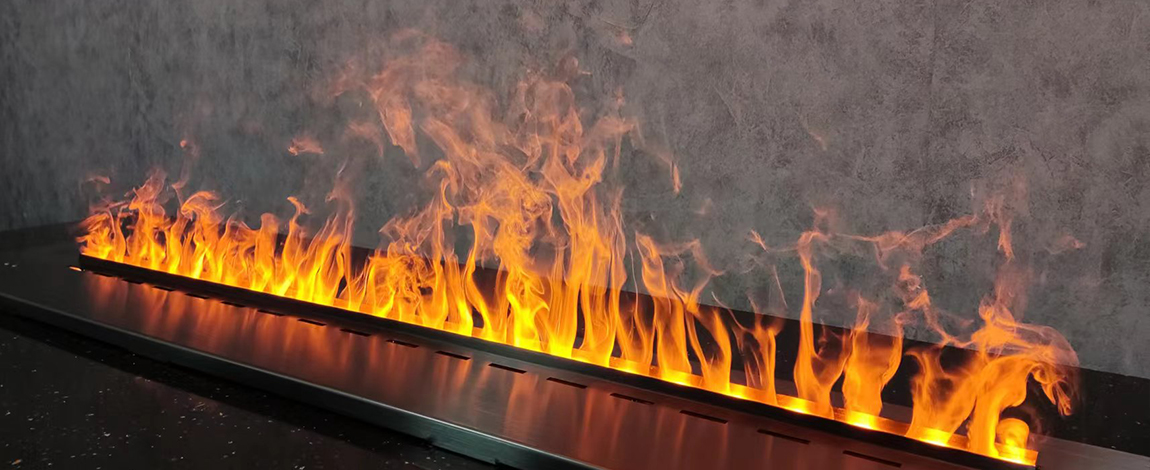
Against this backdrop, the manufacturer AFIRE is promoting the Fire Mood Design concept, in which the central element is a water‑vapor fireplace. Paired with AI algorithms, such a device offers not fire in the traditional sense, but a controllable flame illusion, designed for scene-based control in residential and public spaces.
When we talk about AI today, we most often think of recommendation feeds on video platforms or voice assistants on smartphones. Algorithms have indeed learned to predict what video you’ll want to watch next and pick music to match your mood. But that’s just the tip of the iceberg—content personalization has long been the norm, and it’s hard to imagine any major streaming service without it.
Much less visible to the average user is another, critically important role of AI—ensuring security in the digital environment. Banking systems use machine learning to detect suspicious transactions in real time, and platforms with stringent data‑protection requirements, including major online casinos, implement algorithms that monitor player activity and block fraudulent actions before they cause damage. When exploring this complex issue in more detail, we turned to specialists from this industry—more precisely, to the authors of a website with a review of online casinos for playing Lightning Storm Live, which you can find here. The authors of the resource explained in detail that modern AI security modules have already become an industry standard: they analyze payments, find anomalies, and speed up security teams’ response, protecting both players and operators.
And finally, the third facet is the physical world, where AI comes through interior design and home ambience. Electric fireplaces with synchronization algorithms like AFIRE’s are a vivid example of how the same technologies that monitor security online are beginning to create warmth and comfort and manage mood at home. And if in the first case algorithms protect our data, here they take care of visual comfort, making the flame predictable, safe, and always aligned with the selected scene.
From an automation standpoint, a traditional fireplace has several problems at once. It physically changes the environment, heats the air and surfaces, requires an oxygen supply and venting combustion byproducts, and any lapse in maintenance increases risks. Even if you add sensors and automation, an unpredictability factor remains—from sudden changes in draft to uneven burning.
In public spaces, the requirements are stricter than for a private home. Hotels and restaurants need consistent, repeatable scenes and clear safety accountability. That’s why fire more often serves as a decorative feature rather than a controllable element that can be synchronized with music, lighting, and guest flow.
Electric fireplaces brought the idea of fire closer to digital control, but they often look like a screen or backlighting rather than volumetric flames. A water‑vapor fireplace takes the next step because it builds the effect on microdroplets of water lit by light, without a combustion process.
This technology changes the underlying constraints. If there is no smoke and no dangerous heat, the flame becomes more of a media object than a heat source, which means it can be controlled in the same way as a lighting scene or a music playlist. At the same time, the conversation stays in the realm of design, since functionally this is not a replacement for heating.
At the core of the effect is a stream of water mist and light, which together create a three‑dimensional image of tongues of flame. An important property here is not only safety, but also repeatability. The specified parameters return an almost identical result, which is critical for algorithms trained to work with stable signals.
Several groups of settings become controllable, which in AFIRE’s materials are described as ambience tools:
It is precisely predictability that distinguishes such a fireplace from live fire. However, manufacturers usually do not disclose which sensors and communication protocols are used in specific models, so the question of compatibility with smart‑home platforms and future AI services remains a gray area.
In the logic of Fire Mood Design, flame is treated as a visual language. It can be calm and almost meditative or, on the contrary, more expressive and noticeable in a space, depending on the time of day and context. In this approach, AI is not a source of imagination, but an orchestrator of parameters that maintains the chosen style.
As typical scenes, modes are described in which the same settings change, but with different aesthetic goals:
The practical value of scenes depends on how truly event‑driven they are. For example, tied to the start of service in a restaurant or to a change in lighting in the lobby. Without integration with external data sources, “scenes” risk being just a set of presets.
AFIRE describes a model in which AI takes into account ambient light, background noise, selected smart‑home scenes, time of day, and the fact of human presence. In a hotel lobby, this can mean a softer look in the morning and a more enveloping one in the evening. In a restaurant, the visual rhythm of the flame can change along with the pace of service, without interfering with kitchen operations or ventilation.
This is also where the controversial part appears. Scenes tied to human presence require sensors and data processing, which raises questions of privacy and cybersecurity. In addition, vapor and lighting need regular maintenance, and in public spaces this becomes a separate line item in operating costs.
Materials about Fire Mood Design mention neuroscience, which links observing smooth natural movements with a sense of comfort. Overall, this is broadly consistent with well‑known visual relaxation effects, although without references to specific studies such claims remain more of a popular explanation than rigorous proof.
The next level, discussed as promising, is connected with generative AI. It can form unique flame visual signatures to match an interior aesthetic—from restrained Scandinavian and Japandi solutions to a five‑star hotel look or a more dynamic, club‑style presentation. AFIRE reports refinements across its electric and water‑vapor fireplace ranges, including variation accuracy, color stability, and modular effects, to prepare the devices for future ambience‑management platforms.
